
Table of Contents
ToggleTraditional Kashmiri Winter Clothing: An Introduction
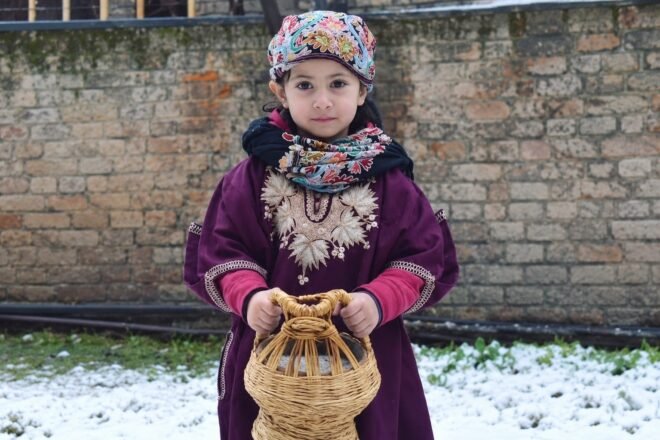
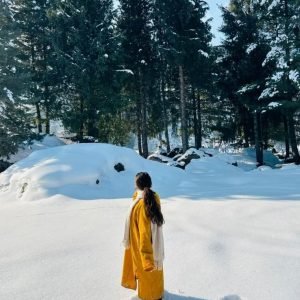
If you are wondering what do Kashmiri people wear in winter, the Pheran is one of the first traditional garments you will notice in Kashmir. This loose-fitting winter robe has been part of Kashmiri clothing culture for generations and is still worn by many people during the colder months.
However, Kashmiri winter clothes are not limited to the Pheran. Traditional winter clothing can include woollen layers, warm socks, shawls and other garments, while modern jackets and thermal wear are also commonly used. The Kangri, a traditional firepot used for warmth, is another distinctive part of winter life in Kashmir.
In this guide, we look at what people wear in Kashmir in winter, how traditional clothing works, what makes the Pheran different, and what tourists should pack for a winter trip.
Book a Complete Kashmir Winter Tour Package Including:
The Pheran: Kashmir's Signature Winter Garment
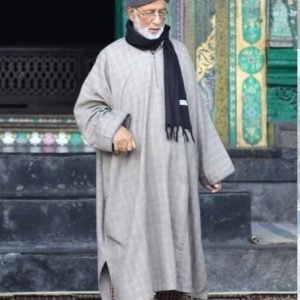
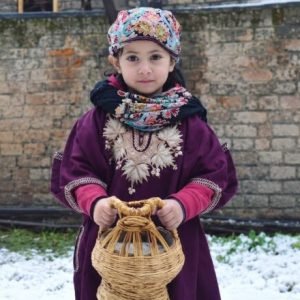
The Kashmiri Pheran in winter is one of the most recognizable examples of traditional Kashmiri winter clothing. It is a loose-fitting outer garment traditionally made from materials such as wool or tweed and worn by both men and women.
The loose design is practical as well as distinctive. Traditionally, the space underneath the Pheran could accommodate a Kangri, helping provide warmth during cold weather. Today, Pherans are available in different fabrics, colours and designs and can be worn with both traditional and contemporary clothing.
For anyone interested in Kashmiri traditional dress, the Pheran offers an important insight into how clothing in Kashmir has developed around the region’s cold winter climate.
The Kangri: Kashmir's Portable Fire Pot
The Kangri is a pot-shaped device made out of earth, and the fire inside is placed in a basket of wicker and is carried around in folds of Pheran. It is one of the unique inventions that could be termed as the first portable heat source that is widely utilized even today by the people of Kashmir. The use of the Kashmiri Pheran in winter along with a fire pot together is indeed a solution to a real problem.
Men's vs Women's Pheran: Key Differences
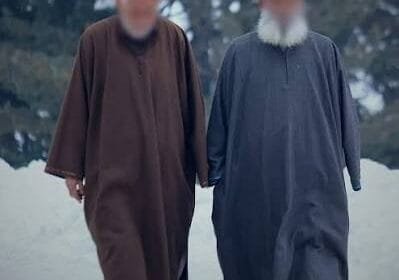
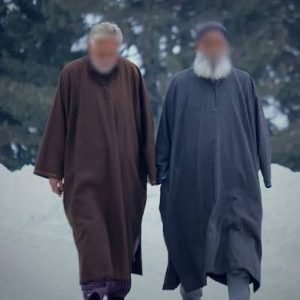
Men’s pheran: Usually a simpler Kashmiri Pheran in winter, made out of a darker material such as wool or tweed, to be worn over a shirt and pants, usually with a woollen hat or a karakuli (distinctive rounded fur hat).
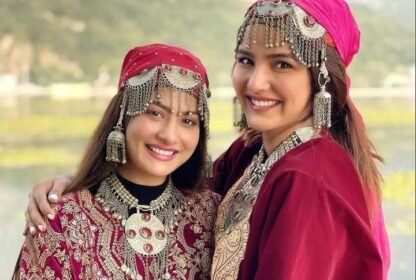
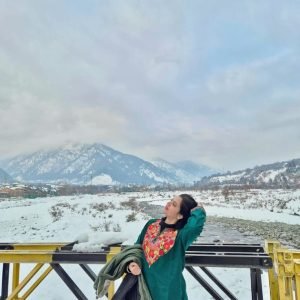
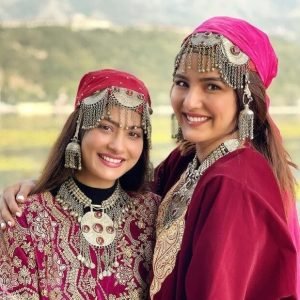
Women’s pheran: More intricate Kashmiri traditional dress, especially in terms of design, with tilla embroidery around the collar, cuffs, and hem, with poots underneath sometimes and a headscarf or taranga on top.
What's Worn Underneath: Layering the Kashmiri Way
However, wearing a single robe alone is not enough when the temperature drops below -5 degrees Celsius, which is quite frequent during the time of Chillai Kalan, being the most difficult forty days in winter in Kashmir, usually ranging from December to February. Under the robe, one sees that people generally wear Kashmiri woollen clothes, including:
- Woollen sweaters or woollen underclothing
- Poots – a fine cotton or woolen underclothing robe, mostly used by women
- Woollen socks that are hand-made and strong boots for wearing during snow and ice
- A woollen shawl or loi (thick blanket-type shawl) that is thrown over shoulders to keep warm outdoors
Understanding Chillai Kalan: Kashmir's Peak Winter
Layering, which consists of using base layers initially, followed by the insulating layer in between and Pheran as the final layer, is completely the same concept that exists today as a way of wearing Kashmiri winter clothes when the temperature is low, with one difference being that it is done way before the introduction of thermal layering in outdoor clothing catalogues. The Chillai Kalan is almost regarded as a season within the season itself, with arrangements being made in advance for it, and what people wear in Kashmir in winter reflects this. .
Pashmina and Wool: Why Kashmiri Fabric Is Different
Any discussion regarding what people wear in Kashmir in winter is incomplete without referring to the famous Pashmina, which refers to the fine cashmere wool produced by the under-hair of the Changthangi goat bred in the high-altitude regions near the border of Ladakh. The Pashmina shawls that are hand spun and hand woven are lightweight as compared to other wools but warmer, and there exists a whole industry in the state of Kashmir revolving around this one item.
However, in their everyday lives, for winters, the people in Kashmir prefer affordable Kashmiri woollen clothes and tweeds over Pashmina that is usually restricted to use for producing shawls and suits, as well as exports. In both cases, the principle involved remains the same, that is, wearing layers of wool that fit tightly to the skin and covering it with an outer coat.
What Tourists Should Wear in Kashmir During Winter
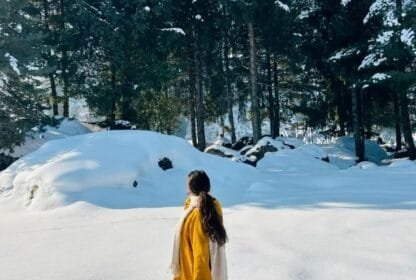
If you are visiting Srinagar, Gulmarg, Pahalgam, or Sonamarg between December and February, then here are some facts about the place that you should be aware of before deciding on the Kashmiri winter clothing for tourists that you should pack:
- The clothes to wear in Kashmir during winter need to retain heat in any case. Temperature in Gulmarg and Sonamarg will be a couple of degrees lower than in Srinagar, so choose the clothes to wear in Kashmir during winter accordingly.
- For Kashmiri winter clothing for tourists, it is more beneficial to have two items of clothes: a down jacket or padded parka on top of clothes serving as the base layer rather than one heavy coat when the weather is cold.
- It needs to be noted that wearing woollen socks and water-repellent, insulated boots is highly recommended for people who will be visiting Kashmir for the first time due to the fact that the feet may get wet in a moment due to moist snow and slush.
- Among the clothes to wear in Kashmir during winter, gloves, woollen hat, and muffler are needed in order to protect extremities that lose warmth faster than other body parts.
- As a souvenir it would be wonderful to buy a Pheran or Pashmina shawl, both traditional Kashmiri winter clothing.
Where to Buy Authentic Kashmiri Winter Wear
The markets located in the ancient towns of Srinagar, particularly the markets around Zaina Kadal and Lal Chowk, apart from the government stores, are reliable places to buy authentic Kashmiri winter clothes such as the real Pheran and Pashmina items rather than the artificially manufactured articles. All the hotels in the town would easily offer you the Kangri whenever asked for, and most of the tourists are aware of the fact that it works better than expected.
Plan Your Dream Kashmir Tour Today
Common Mistakes Tourists Make with Winter Clothing in Kashmir
- One big coat instead of following the layering technique for the clothes to wear in Kashmir during winter
- Not using the thermal wear since “it is already warm enough in the jacket”
- Regular shoes instead of insulated and water-resistant boots
- Failing to consider wind-chill factor at higher elevations like Gulmarg when compared to Srinagar while choosing Kashmiri winter clothing for tourists
- Buying a Kashmiri traditional dress like the Pheran only for the sake of taking photographs but not for additional insulation
Regional and Seasonal Variations
What people wear in Kashmir in winter varies depending on the region of the Valley. For high altitude regions in the Valley, such as Gulmarg or certain areas of Anantnag district, wearing thick Kashmiri woollen clothes and layering is common practice. In the city of Srinagar, it is fashionable to wear the Pheran, one of the popular Kashmiri winter clothes, over jeans or even substitute it with insulated jackets because of the global influence of fashion over the last couple of decades. But the older generation and people living in the countryside in the Valley prefer their traditional clothing.
In Short:What Do Kashmiri People Wear in Winter?
Winter Clothing in Kashmir is an old tradition which has withstood the test of time and it cannot be just an object confined in a museum; Pheran, Kangri and Kashmiri woollen clothes have survived because of the functionality they possess and minor changes have been made in them from generation to generation, but maintaining their original look.
How To Book a Kashmir Winter Tour Package online?
Contact Brown Chinar Kashmir
FAQS (Frequently Asked Questions)
1.What is the traditional winter dress of Kashmir?
The Kashmiri traditional dress for winter for both sexes is known as the Pheran, consisting of a woollen or tweed coat which is worn over the woollen wear.
2.What is a Kangri, and for what use is it employed?
Kangri is a small firepot, which is made up of clay and is covered by a wicker covering, containing live coals under the Pharan, serving as a heating material in Kashmir, traditional heating material in Kashmir.
3.Is Pashmina the same as Kashmiri wool?
Not at all, as Pashmina is fine Kashmiri cashmere consisting of Changthangi goat wool, which is used to make shawls and embroidered designs; while Kashmiri wool is simply wool or tweed.
4.What items would tourists need to pack for winters in Kashmir?
Kashmiri winter clothing for tourists includes underlayers for insulating the body, an insulated jacket, footwear that can withstand the moisture, woolen socks, gloves, and cap or muffler – and the traditional Pheran or shawl, if desired.
5.Which season is the coldest in Kashmir?
The coldest season is that of Chillai Kalan – the peak winter season – falling roughly between December 21 to January 31, when the maximum snowfall occurs.
6.Can Pheran be worn over contemporary clothes like jeans?
Yes, nowadays the Kashmiri Pheran in winter is commonly worn over contemporary clothes such as jeans and trousers, especially by the youth in Srinagar.
7.Are Kangri safe to use?
Yes, when used wisely – it is after all live fire! That means it cannot be handled carelessly (by not knocking it over and by keeping a safe distance from the edge of the clothing). In most cases, parents ensure that their children are careful while carrying it, and any tourist who uses it for the first time is usually well-guided.
8.How is Pheran different from a typical shawl garment?
A Pheran is an outer garment of traditional Kashmiri winter clothing, which is basically made for wearing under it the Kangri. It is not just any shawl that is added as another layer over the regular clothing but rather a special garment which can be used under it the Kangri.
9.How expensive is it to buy a Pheran or Pashmina shawl?
Prices vary depending on materials used and the amount of effort that was spent to create it. A simple woollen Pheran may be cheaper whereas a handmade Pashmina shawl with tilla or sozni embroidery may be quite expensive.
10.Do Kashmiri people change their clothes to something specific while staying inside a house in winter?
Not really because the same Kangri-and-Pheran technique is used both indoors and outdoors in order to keep warm as there is no heating system in Kashmiri house