
Table of Contents
ToggleAmarnath Cave Temple: A Sacred Himalayan Pilgrimage
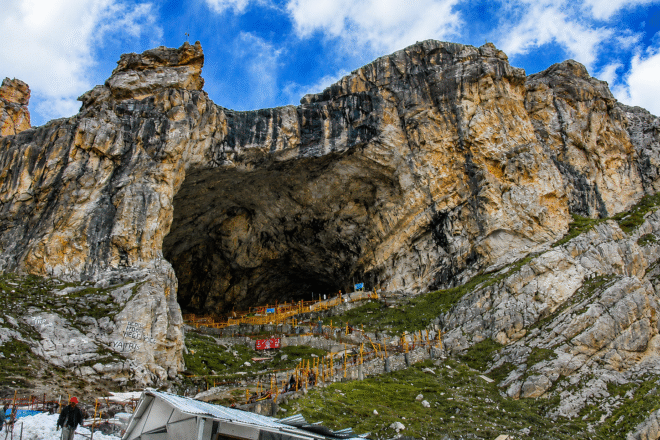
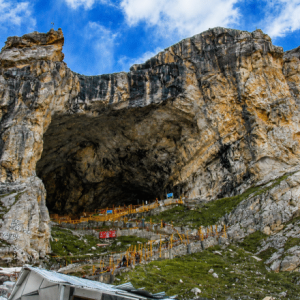
The sacred Shri Amarnath Cave Temple is one of the most revered Hindu pilgrimage sites in the Himalayas, attracting lakhs of devotees every year during the annual Amarnath Yatra. Located at an altitude of nearly 3,888 meters (12,756 feet) in the snowy mountains of Kashmir, the cave is famous for the naturally formed ice Shivling, believed to symbolize Lord Shiva.
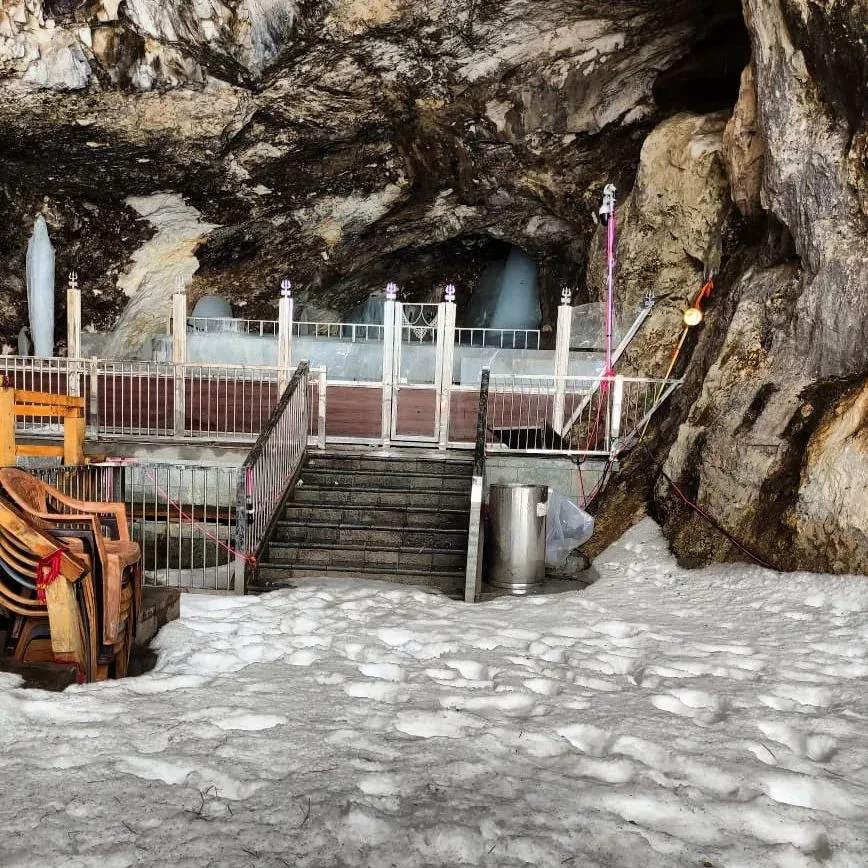
What makes the Amarnath Cave truly unique is that the ice Shivling forms naturally inside the cave every year during the Shravan season and gradually melts afterward, making it a rare spiritual and natural phenomenon. Surrounded by glaciers, steep mountain trails, and unpredictable Himalayan weather, the journey to the cave is considered both a test of faith and endurance.
In this complete Amarnath Yatra Guide 2026, you will find everything you need to plan your pilgrimage safely and smoothly, including Amarnath Yatra routes, registration process, helicopter booking details, weather conditions, accommodation options, trekking difficulty, safety tips, and the best time to visit the holy cave shrine in Kashmir.
Book a Complete Amarnath Yatra 2026?
✔ Helicopter Packages
✔ Pahalgam / Baltal Routes
✔ Hotel + Transport Included
Call / WhatsApp:
+91 6005039532
Amarnath Temple Location & Height
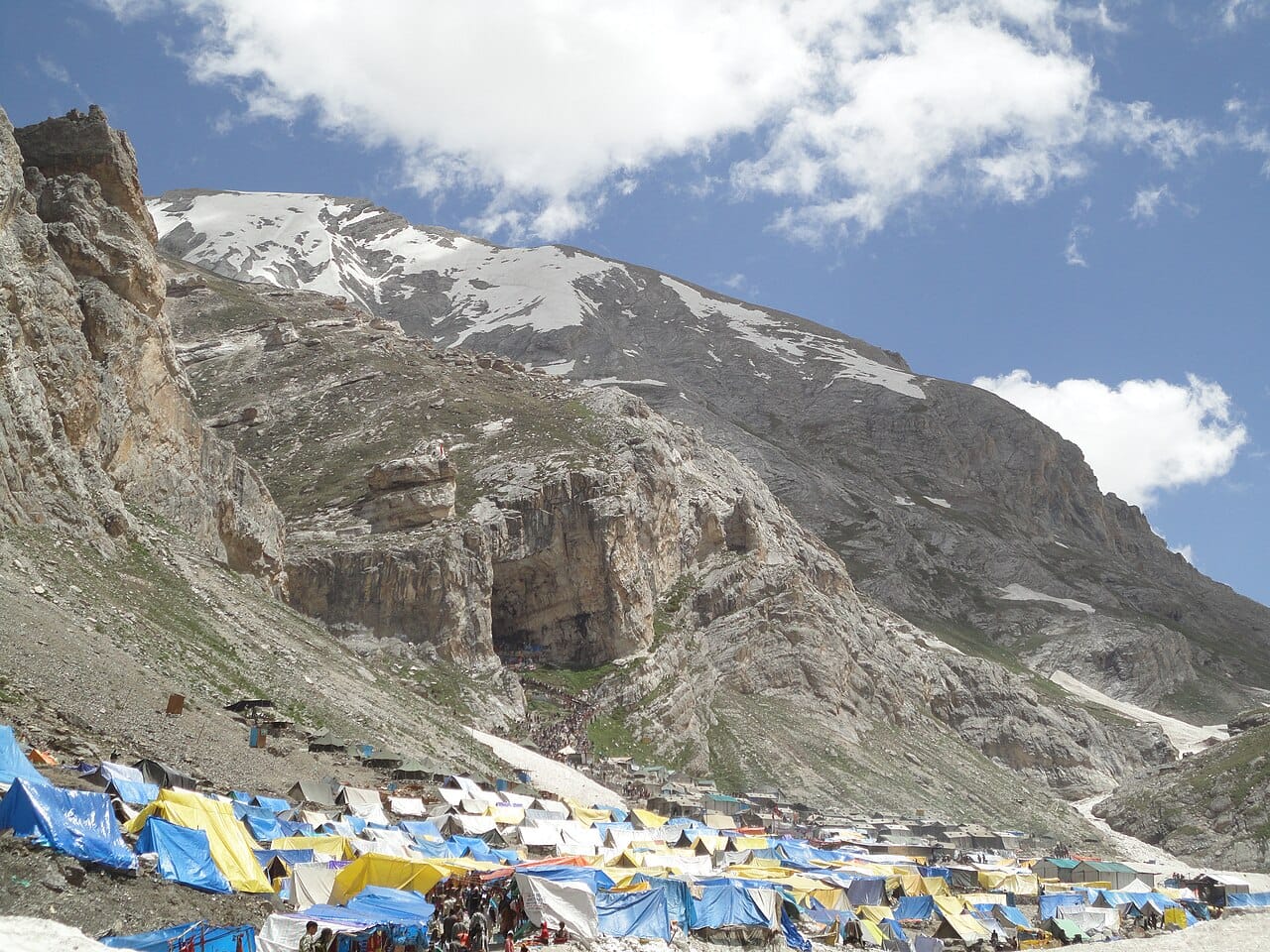
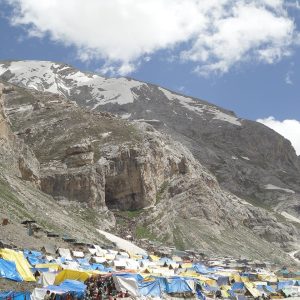
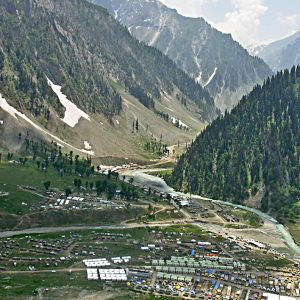
The Shri Amarnath Temple is located in the Anantnag district of Jammu and Kashmir, India, adjacent to the area of Pahalgam in the Himalayan Lidder Valley,making it an important part of the Amarnath Cave location in Kashmir. The temple is found in the mountainous terrain, near the glaciers at the Amarnath Glacier region, and thus it is considered to be among the most secluded shrines in India.
It stands at a height of about 3,888 meters or 12,756 feet above sea level and is surrounded by snow-capped mountains, rock formations, and the challenging weather conditions of the Himalayas.
Important fact: The Amarnath Yatra is not accessible throughout the year, which is crucial information for those planning how to reach Amarnath Cave Temple. Due to heavy snowfall and extreme weather, the cave remains closed for most months and is only opened for a limited annual pilgrimage (Amarnath Yatra).
The Amarnath Yatra takes place only once a year, typically between the months of July and August, which is Shravan month,considered the Amarnath Yatra best time to visit. After that, the area becomes entirely inaccessible once more due to severe winter and snowfall.Pilgrims also often look for options like the Amarnath helicopter booking guide to make the journey more convenient.
Due to the mountainous terrain and the unpredictability of the climate, there is a lack of oxygen in the atmosphere
History and Mythological Significance
This Amarnath cave temple holds great significance from a mythological point of view for Hindus, as it is considered to be the place where Lord Shiva disclosed the secret of immortality (Amarnath katha) to Goddess Parvati.
As per tradition, Lord Shiva was devoid of all materialistic attractions before making his way into the cave. He left Nandi at Pahalgam, the moon at Chandanwari, the snake at Sheshnag, and the five elements at Panchtarni, signifying that he had detached himself from everything materialistic.
In the cave, the naturally formed Shivling made of ice is revered as Lord Shiva, and this Shivling undergoes transformation naturally depending on the season, making it even more intriguing.
According to tradition, the cave has been known to local communities for hundreds of years now. It is commonly believed that the cave was first discovered by a shepherd called Buta Malik, who was blessed by Lord Shiva.
Through time, particularly during the medieval era and subsequently under the reign of the Dogra rulers, the Amarnath Yatra grew more organized and firmly entrenched as one of the most important pilgrimages among Hindus.
The Amarnath Temple has since become one of the holiest pilgrim destinations in India, drawing thousands of pilgrims annually.
The Amarnath Temple Yatra – An Annual Spiritual Journey
The Amarnath Yatra is organized every year by the Shri Amarnath Shrine Board (SASB). The pilgrimage usually lasts 45–60 days during the summer season.
- Lakhs of devotees participate every year
- Strict registration and medical checks are mandatory
- Government provides security, food, and medical support
This Yatra is considered one of the most spiritually powerful journeys in India and it is not just a trek it’s a journey through breathtaking Himalayan landscapes, with every step bringing pilgrims closer to the sacred cave.
Main Routes for the Yatra
1. Pahalgam Route (Traditional Route)
- Distance: 45–48 km trekking
- Duration: 3–5 days
- Route: Pahalgam → Chandanwari → Sheshnag → Panchtarni → Cave
- Scenic and gradual climb
- Preferred by families and first-time pilgrims
2. Baltal Route (Short Route)
- Distance: About 14 km from Baltal to the cave
- Duration: 1–2 days
- Route: Baltal → Domail → Barari → Panchtarni → Cave
- This path is much steeper and can be completed in a single day, but it is physically demanding.
- Many who choose this route return the same day or stay overnight in tents at Baltal.
- It is popular among younger pilgrims and those with less time.
Amarnath Yatra By Road And Air
1.By Road:
Srinagar is the main hub connecting both routes. From here:
- Srinagar to Amarnath yatra taxi service is available.
- Jammu–Srinagar highway connects major cities
2.By Air:
- Nearest airport: Srinagar International Airport
- From airport: Srinagar taxi service are available to base camps
3.Helicopter Services:
- Baltal → Panchtarni
- Pahalgam → Panchtarni
From Panchtarni, pilgrims must walk approx. 6 km or use pony services.
Amarnath Yatra Registration & Permits
Amarnath Yatra Registration is compulsory for all those devotees who wish to undertake the pilgrimage to the holy Cave of Amarnath,as highlighted in every Amarnath Yatra guide 2026. All the pilgrims need to secure a proper Yatra permit from the SASB, along with their mandatory medical fitness certificate. It ensures that they are physically fit for the journey.
Those pilgrims who do not have valid registration are not permitted to take part in the Amarnath Yatra pilgrimage. The reason behind this stringent requirement is because of the tough terrain, less amount of oxygen, and harsh Amarnath weather conditions in the mountains.
Amarnath Yatra Online Registration Process
Pilgrims can complete registration easily through the official SASB website.
- Visit the official Shri Amarnath Shrine Board portal
- Select Yatra route (Pahalgam or Baltal)
- Fill personal details carefully
- Upload required documents
- Choose travel date and confirm slot
- Download Yatra Permit after approval
Required Documents for Online Registration
- Valid Government ID proof (Aadhar Card / Voter ID / Passport / Driving License)
- Compulsory Health Certificate (CHC) issued by an authorized doctor confirming fitness for high-altitude Yatra
- Passport-size photographs (recent, digital copies for upload)
Online registration is by far the fastest and easiest way to register, particularly for pilgrims who plan their trip in advance..
Amarnath Yatra Offline Registration Process
For pilgrims who are not comfortable with online booking, offline registration is also available at authorized centers.
- Visit authorized bank branches designated by SASB
- Collect and fill the Yatra registration form
- Submit required documents
- Complete verification process
- Receive Yatra Permit after approval
Offline registration is especially useful for pilgrims from rural areas or those without internet access.
Required Documents for Offline Registration
- Valid Government ID proof (Aadhar Card / Voter ID / Passport / Driving License)
- Compulsory Health Certificate (CHC) issued by an authorized doctor
- Passport-size photographs (3–4 copies)
- Duly filled registration form
Important Note
It is mandatory for all pilgrims to register. Without proper permission from Amarnath Yatra and medical permission, no one is permitted to enter the Amarnath Yatra route due to high altitude safety rules and controlled entry by the government.
Best Time to Visit Amarnath Yatra Cave Temple
The perfect period to witness the Cave of Amarnath Temple is during the annual pilgrimage trip, typically done in July-August according to the Hindu calendar.
In this short period:
- Shivling (Lord Shiva), the holy ice formation, takes its full shape in the cave
- Amarnath Yatra paths (Pahalgam & Baltal) are open for devotees
- The weather is relatively favorable as compared to other times of the year (though very cold and variable)
However, during other months, the entire area remains entirely inaccessible because of heavy snow and unfavorable weather.
Facilities and Safety Measures
In the Amarnath pilgrimage, there is a robust safety net provided by the government, along with the Shri Amarnath Shrine Board (SASB), which enables the pilgrims to successfully make the journey in such harsh Himalayan terrain, as mentioned in the Amarnath travel guide 2026.
- There are medical camps that have been established in specific distances on both routes, i.e. Pahalgam and Baltal routes
- Facilities such as oxygen cabins and emergency oxygen supply are there at high altitude points to help with breathlessness and height sickness
- Free langar facility, which means free meals offered, is available for all pilgrims on the way
- Deployment of security forces in the form of CRPF, police, and mountain rescue squads are present
- Emergency rescue services are on standby to cater to any kind of sudden weather-related emergencies
All the facilities mentioned above have been specifically arranged for pilgrims to facilitate their journey in difficult climatic conditions.
Real Pilgrim Experience Insight
During the recent Amarnath Yatra period, our team has assisted several pilgrims who belong to Gujarat, Maharashtra, and Delhi to organize their pilgrimage tours in Kashmir in a very systematic manner.
A group of 5 travelers toured the 7-day package of Kashmir Tour + Amarnath Yatra, which includes:
Based on our on-ground experience, we found that:
- Baltal route is best if faster darshan is required
- The Pahalgam route is better if the travelers want peace and spirituality while traveling
- Elderly travelers and those who travel with family members opt for helicopter service since it eases their efforts in high altitude regions
This knowledge of travel gained through actual experience allows the traveler to choose the appropriate route according to his/her convenience and preferences.
Ideal Detailed Itinerary for 7 Days Kashmir + Amarnath Yatra Tour Package
Day 1: Arrival + Srinagar Local
- Arrival at Srinagar Airport
- Transfer to hotel
- Shikara ride on Dal Lake
- Visit Mughal gardens: Shalimar Bagh, Nishat Bagh, Chashme Shahi
- Visit local markets
- Overnight stay in Srinagar
Day 2: Gulmarg Day Tour
- Drive to Gulmarg
- Enjoy Gondola ride & sightseeing
- Return to Srinagar
- Overnight stay in Srinagar
Day 3: Srinagar to Pahalgam (Early Morning Drive)
- Early morning drive from Srinagar to Pahalgam
- Enroute visit saffron fields at Pampore
- Visit Awantipora Ruins
- Continue scenic drive along Lidder Valley
- Hotel check-in
- Overnight stay in Pahalgam
Day 4: Pahalgam to Srinagar
- Visit Betaab Valley, Aru Valley (optional union taxi)
- Drive back to Srinagar
- Evening at leisure / market visit
- Overnight stay in Srinagar
Day 5: Srinagar to Sonamarg
- Drive to Sonamarg
- Visit Thajiwas Glacier (pony ride optional)
- Enjoy scenic views
- Overnight stay in Sonamarg
Day 6: Amarnath Darshan
- Early departure for Amarnath Cave
- Darshan via helicopter/trek
- Return to Baltal/Sonamarg
- Overnight stay
Day 7: Sonamarg to Srinagar Drop
- Drive back to Srinagar
- Airport drop
- Tour ends with spiritual memories
Book Your Dream Kashmir Tour — Request Your Free Quote
Safety Tips for Pilgrims
The Amarnath Yatra takes place at high altitude in the Himalayas, and hence, it is very important to be prepared before one sets out for the pilgrimage, considering the Amarnath weather conditions. According to expert recommendations based on on-ground experiences, pilgrims should take into account the following precautions:
- Wear layered warm clothes to guard yourself from any kind of cold or sudden change in weather conditions.
- Always take slow steps when walking because altitude sickness is quite common at higher altitudes.
- Keep yourself hydrated so that you can stay energetic.
- You should always follow all instructions and routes that have been given by SASB and security officials.
- Never go alone for trekking and you should always stick to your team or guide.
- Always carry some basic medicines, ORS, and other emergency kit along with you.
It is necessary to take these precautions due to many reasons like less oxygen, weather conditions, and terrain.
Accommodation Options
While conducting the Amarnath Yatra (July-August),which is considered the Amarnath Yatra best time to visit, l lodging arrangements are made by the local administration and SASB under certain guidelines to facilitate safety during lodging at high altitudes for the pilgrims.
- Srinagar hotels and guest houses – Convenient stay before and after Yatra with adequate transport links and facilities
- Pahalgam hotels and camps – Conducive places for pilgrims who choose the conventional trekking route with scenic settings
- Baltal tent stay and Sonamarg hotels – convenient place to stay close to the other alternative Yatra route
- Government Yatra camps – Facilities equipped with basic amenities and healthcare along with controlled entry for pilgrims
- On the basis of ground reality, tour operators such as Brown Chinar Kashmir Tour and Travels also offer complete Amarnath yatra tour packages that include facilities like accommodation, transportation, and other support services for pilgrims. Based on the packages chosen, pilgrims will either have to stay in tents, SASB huts, or standard hotels/deluxe hotels at the base camp locations like Sheshnag, Panchtarni, and Baltal. The package ensures comfortable stay, good hygiene, and meal facilities but requires advance bookings.
Environmental Responsibility
Shri Amarnath Yatra occurs in an extremely sensitive ecological region of the Himalayas, where the delicate environment of the mountains, glaciers, and biodiversity are affected directly due to human activity, as highlighted in the Amarnath Yatra guide 2026 Given that millions of pilgrims visit this holy site every year, it becomes essential for pilgrims to keep the ecological balance intact.
Following the principles of Shri Amarnath Yatra and travel procedures in the region, pilgrims are advised to conduct themselves in an environmentally friendly manner during their entire trip.
- Do not use any single-use plastic, such as bottles, polythene bags, and wrappings
- Use reusable water bottles and refill them with water from designated places on the trail
- Refrain from littering trekking paths, campsites, and rest points and always make sure to dispose of waste in dustbins available at checkpoints
- Protect the sensitive Himalayan ecology, which includes animals, plants, and other sources of water
- Adhere to the universally accepted principle of leave no trace, meaning leave nothing behind other than your footprints
Besides, pilgrims are encouraged to participate in cleanliness campaigns and waste disposal programs organized by the concerned authorities and voluntary organizations during the Yatra period. This will ensure that there is minimal impact on the environment, and hygiene standards are maintained on treacherous routes such as Pahalgam and Baltal,which are commonly covered in how to reach Amarnath Cave Temple.
Such conservation of the sacred place is not only mandatory but also an integral part of the spiritual journey.
Official Authority & Weather Advisory
Shri Amarnath Yatra is officially organized and run by Shri Amarnath Shrine Board (SASB), along with the J&K administration and disaster management agencies. Every decision that takes place regarding route opening, movement of the yatris, and other aspects, such as disaster management, are strictly made according to official guidelines.
Because of the harshness of the Himalayan terrain, weather conditions in the area become quite uncertain at all times during the Yatra period (July–August). Even during the height of the pilgrim season, the following possibilities exist:
- Unexpected precipitation (snow or rain) is possible at any moment
- The temperature could go down to below freezing points within hours
- Windy conditions and poor visibility could impact trekking paths
- There could be a sudden closure of some trekking paths
It is crucial to always monitor SASB alerts, IMD weather forecasts, and directions provided by security and rescue forces operating on-site. Disregarding weather warnings poses risks, especially because of the sensitive and elevated geographical landscape.
To have a smooth pilgrimage tour, one must always stay informed and abide by official recommendations due to the uncertainties associated with Himalayan weather conditions.
Conclusion
In conclusion, the Amarnath Yatra is far more than just a pilgrimage to a sacred destination. It is a spiritual journey that reflects unwavering faith, devotion, inner strength, and the breathtaking beauty of the Himalayas. From witnessing the naturally formed ice Shivling of Lord Shiva to trekking through challenging mountain routes, every moment of the Yatra carries deep religious and emotional significance.
Whether you choose the traditional Pahalgam route or the shorter Baltal route, travel by road or opt for helicopter services, proper planning is essential for a safe and comfortable experience. Understanding the Amarnath Cave location, weather conditions, registration process, accommodation options, and the best time to visit can make your journey smoother and more meaningful. Pilgrims are also advised to stay physically fit, mentally prepared, and strictly follow the guidelines issued by the Shri Amarnathji Shrine Board (SASB).
Ultimately, the Amarnath Yatra is not only about reaching the holy cave temple but about experiencing devotion, perseverance, self-discovery, and spiritual transformation amidst the majestic mountains of India.
FAQS (Frequently Asked Questions)
Q1: Why is the Amarnath Cave Temple famous?
The temple is famous because it has a naturally occurring ice lingam of Lord Shiva that emerges in the cave every year in Yatra season.
Q2: Is the Amarnath Yatra safe?
Yes, it is safe if you take care of the guidelines laid down by SASB and have the necessary certificates.
Q3: Is registration necessary for Amarnath Yatra?
Yes, registration is essential for all pilgrims, and no one will be allowed access without a Yatra permit.
Q4: Can senior citizens visit the Amarnath Cave Temple?
Yes, senior citizens may visit the temple provided they are healthy and do not face any physical issues. But the use of helicopters is advisable for ease of travel.
Q5: Which is the best route to Amarnath Yatra?
The Pahalgam route is longer but scenic and gradual, while the Baltal route is shorter but more steep and physically demanding.
Q6: What is the height of the Amarnath Cave Temple?
The temple is situated at a height of around 3,888 meters (12,756 ft) above the sea level in the Himalayas.
Q7: In which time period is Amarnath Yatra held?
The Yatra takes place annually during the months of July to August (Shravan period).
Q8: How can people visit Amarnath Cave Temple?
The pilgrims can undertake their journey either through roads from Srinagar to base camps (Pahalgam or Baltal) or using helicopter services till Panchtarni and thereafter trekking.
Q9: What are the essential documents needed for Amarnath Yatra?
The pilgrims must have the proof of ID, Compulsory Health Certificate (CHC), passport-sized photographs, and Yatra Registration Permit.
Q10: What measures will be taken during bad weather conditions during Amarnath Yatra?
If there is any unfavorable weather such as snowfall and rain, then the routes will get temporarily closed by SASB and security officials
About the Author
The Shri Amarnath Cave Temple guide has been developed by the Brown Chinar Kashmir Travel Expert Team, a leading travel agency of Kashmir providing expertise in planning Amarnath Yatra, offering Kashmir tours packages, cab service, and assistance in Amarnath helicopter booking guide,
Our expert team has hands-on experience of arranging pilgrims in Srinagar, Pahalgam, Baltal, and Sonamarg, and we deliver real-time travel guidance with live updates on the ground. Our travel advice is based on firsthand experience as well as official updates obtained from the Shri Amarnath Shrine Board (SASB).
We help you in planning your Amarnath Yatra 2026 along with travel arrangements at the time of arrival in Kashmir.