Table of Contents
ToggleOverview
The Indus, one of the longest and most populated rivers in the world, is important for the geography, history, economy, and culture of the Indian subcontinent. The river originates from the Tibet highlands, passes through Jammu and Kashmir of India The river is of crucial ecological and geographical importance, as well as having immense historical significance in the formation of civilizations and political frontiers. One of the most vital aspects of the Indus is that it exercises control over the lives of millions, as it serves as a key source for water.
The Indus river has for centuries been a source of lifeblood for the people of Kashmir and its surrounding regions. The waters of the Indus sustain irrigation, trade, and day to day work in the area; therefore, it is precious to the people of the region. This blog post will cover the major historical and cultural landmarks of the Indus River, along with its journey through Kashmir.


Book a Complete Kashmir Tour Package including:
• Srinagar Houseboat Stay
• Gulmarg, Sonamarg & Pahalgam Sightseeing
• Private Cab & Local Guide
Call / WhatsApp:
+91 6005039532
The Beginning Of Indus River: A Revered Lifeline
The Indus River derives from Tibet, specifically the Tibetan Autonomous Region of China. It is fed by the river which originates from the northern slopes of Kailash Range, which is near Lake Mansarovar. This location, in particular, is one of the most important lakes for practitioners of Hinduism and Buddhism. Following that step, the river starts a long journey to south Indian continent, passing through ladakh region of Jammu and Kashmir, The river bears complex cultural and religious meanings for that population. In Hinduism, this river is called Sindhu with the title, goddess of the river. It is also cited in various old scriptures such as the Rigveda. Like many derive traditions, it is believed to be one of the most significant rivers in India and is said to represent purity and life. Buddhist practices that parts of India, particularly the monastery regions of Ladakh, Indus River is treated as an important geographical and spiritual landmark of the region.
The Indus River’s Course through Kashmir
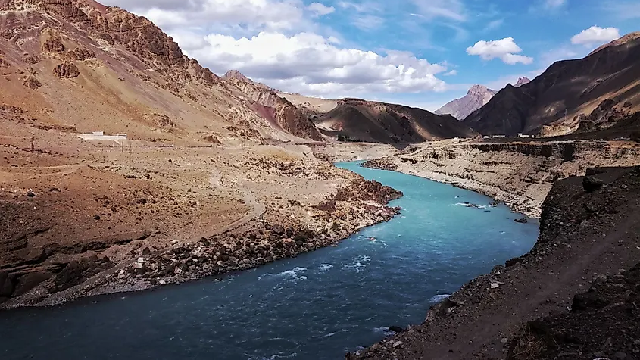
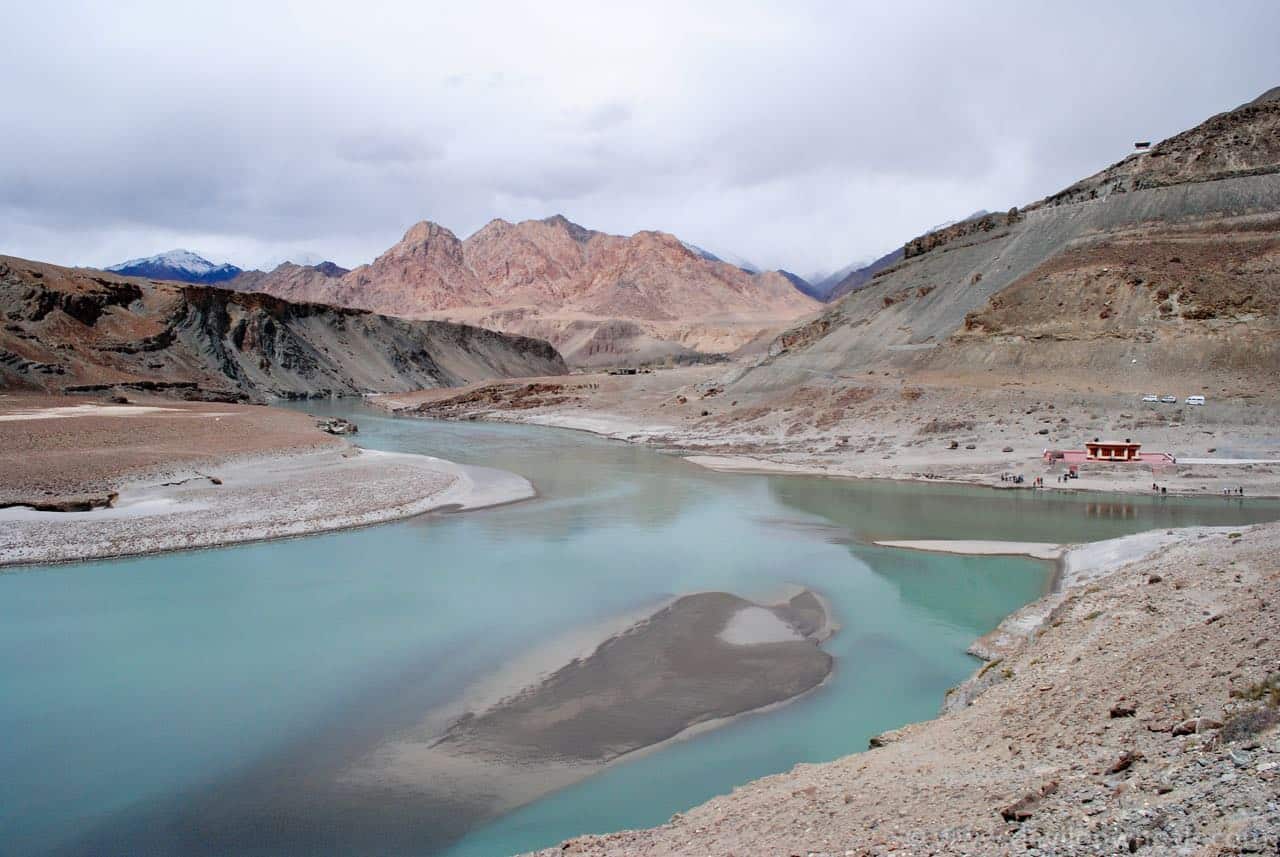
The Indus River covers a large area but its course through Jammu and Kashmir has special significance. It first enters the Indian held territory of Jammu and Kashmir through Ladakh, which is a dry, cold, and rocky region with low vegetation. Still, the Indus sustains numerous communities and it’s agriculture despite the harsh environment being so dominant.
The Indus River is important in agriculture in Ladakh. The weather conditions of this region are cold and dry, hence, the ability to grow crops is restricted. However, the water supply from the Indus enables the farming of barley, wheat, and certain vegetables. The availability of these crops is crucial for the sustenance of the local population, a good number of whom practice subsistence farming.
The river also flows through Leh, the capital of Ladakh, and reaches western parts of the region subsequently flowing through Kargil . Even though the stretch of the Indus River in Jammu and Kashmir is limited, its usefulness for the region’s ecology and economy is great. Along with irrigation for crops, drinking water and water for domestic use, as well as local industry in the region also depend on the river.
The Indus Valley Civilization: The Cradle of Ancient Culture
The Indus River region is home to some of the world’s oldest and most sophisticated civilizations. It was during this time that the Indus Valley Civilization was known to thrive. This civilization, which existed between 3300 BCE to 1300 BCE, is one of the earliest advances urban cultures in the world. This civilization spread throughout some parts of India, with the Indus River inclusive in its core.
Mohenjo-Daro and Harappa were cities on the bank of the Indus River that displayed highly developed urbanization. The streets were planned, and there were sophisticated drainage systems and water storage centers. Everything was highly organized. The people living in the Indus Valley Civilization depended on the Indus River for agricultural, commercial, and everyday activities. They cultivated wheat, barley, and cotton, and also traded through the river with neighboring territories.
The breakup of the Indus Valley Civilization in about 1300 BCE is debated. Some historians argue that shifting river patterns, especially the moving location of the Indus Rivers, contributed greatly toward the downfall of the civilization. The primary concern is the legacy of the Indus Valley Civilization. Although the civilization collapsed, it still forms a very important component of the culture of the region today. Its impact is still witnessed on modern practices like agriculture, trade, and water resource management.
Modern Day Uses of Indus River: Agriculture and Industry and Hydropower
The Indus River is still, and will always be, a major concern for the people of the areas surrounding it, especially in terms of agriculture, industry, and hydropower.
Agriculture
With the Indus River flowing through the Punjab region of India this area is able to engage in farming and agriculture. This region is also known as the ‘breadbasket’ of the Indian subcontinent because of its high agricultural productivity. The river helps to irrigate a number of fields with wheat, rice, cotton and many other crops that help millions of farmers as it supports their livelihoods.
The Indus also sustains agriculture in the Ladakh area where barley and vegetables are grown. The river also aids the development of fruit orchards in some areas like Leh and Kargil where apples, apricots, and walnuts are produced.
Hydropower
Apart from agriculture, the Indus River remains an important contributor to the generation of hydropower electricity. Numerous dams and hydroelectric venues were built by both India along the river, including the most important Baglihar Dam in Jammu and Kashmir. Even within India, this region is one of the most important in terms of electricity production to the area.
The Indus River and its Symbolism: The Threads Binding Cultures
The Indus river marks a leading boundary for a number of cultural civilizations and is important for the ethos of millions. For centuries it has been the subject of artistic, literary, musical and even meditative creativity. The river is most revered in the Jammu and Kashmir region by the Hindus and even some Buddhist sects.
Hinduism and the Indus River
In the case of Hinduism, the Indus River is worshipped as a goddess who nourishes and gives life to the people. Hindu mythology places a lot of importance on the Indus which is why she is revered as the goddess Sindhu who promotes calmness and fertility. Along with her waters undertaking the shape of a river, Sindhu’s waters is considered holy and on her banks, people often perform rituals and pujas. The river’s water is also used for religious sprinkling and for making offerings during bathe in-heath situations.
Buddhism and the Indus River
The Indus river is immensely respected by Buddhism as well, which is largely practiced in Ladakh. The river passes through Ladakh, which is famous for its culture as well as for Buddhist temples and architectural structures. The Indus has profoundly benefited cultural areas a its focal point. Many instructors particularly from the region’s monastic set-up have drawn from the river for their teachings. ҚК relief of the Hinduism river with the calmness of its surroundings is a source of motivation to numerous Buddhist monks and the many spiritual leaders, making the river a major component of the Spirit of the region.
Celebrations and Festivals
Ethnic groups in Jammu and Kashmir celebrate a variety of festivals and rituals associated with the rivers and in this particular case the Indus River. Those festivities are usually performed by the river where devotees and locals come together to pray, perform some rituals, and celebrate with water. One of such events is ‘Sindhu Darshan Festival’ which commemorates the sacredness of the Indus River. It is a confluence of people belonging to diverse faiths. This festival further stresses the significance of the river as a symbol of oneness and common heritage.
Environmental Problems: Overpopulation, Pollution and Deforestation
A multitude of human factors has worsened health of the ecosystem of the river Indus. The river is, unfortunately, suffering at the hands of overpopulation, pollution and wasteful practices in India and the surrounding nations. The river’s physical and chemical health has been greatly distressed by the wasteful practice of deforestation, water over extraction, and pollution.
Pollution
The countries that surround the Indus River have begun industrializing rapidly, causing horrifying levels of pollution. For instance, this river sees problems like sewage disposal without any pre-treatment, pesticides, fertilizers, and industrial effluent treated as agricultural irrigation.
The waters are now unsafe for humans and aquatic life because pollution did this harm. In effort to keep the ecosystems intact, the river can be cleaned, and industrial waste can be controlled. One good thing about pollution is it allows people to have jobs such as cleaning rivers and grestly improves the overall health of the area.
Deforestation
The clearing of trees for agriculture and urban construction has been done for decades. The absence of vegetation increases the chances of soil erosion and greatly effects water quality. As a result of this, the ability for the river to control its flow gets lost due to the decreased retention of water within the vegetation deprived watershed areas.
Water Scarcity
The consequences of climate change, excessive extraction, and dam constructions lead to a lack of water in areas around the Indus River. The river’s water levels have always affected the Hisplain region, in particular the agricultural yield and the dependency of the local population on the water.
Conclusion: Safeguarding the Indus River for the Upcoming Generations
The Indus River possesses great significance in the subcontinent of India as for thousands of years, it has served with water supply, food, and deep spiritual significance for the people residing in the region. Unfortunately, this river is challenged with many issues like congestion, climate change, and ethnic conflict. Protecting the Indus river is pertinent, not only for the environmental impact but for the millions of people who depend on the river for their livelihood and health.
As in many international river basins increased cooperation and investment in environmental and water resources development is absolutely necessary for the future sustainability of the river. By overcoming the Indus’s environmental and political problems, this ancient and holy river will continue to serve the needs of all for many generations.


People Also Ask
What is the Indus River?
The Indus River is one of the longest rivers in the world, originating in Tibet, flowing through India and eventually draining into the Arabian Sea. It has historical and cultural significance, especially for the regions it flows through, including Jammu & Kashmir.
Where does the Indus River originate?
The Indus River originates from the Tibetan Plateau near Lake Mansarovar, flowing through the Ladakh region of Jammu & Kashmir
What countries does the Indus River flow through?
The Indus River flows through three countries: China (Tibet), India (Jammu & Kashmir),
What is the total length of the Indus River?
The total length of the Indus River is approximately 3,180 kilometers, making it one of the longest rivers in Asia.
What is the significance of the Indus River in the region?
The Indus River has been the lifeblood of the regions it flows through, particularly in Jammu & Kashmir. It supports agriculture, provides water for drinking, and has historical importance, being part of one of the world’s oldest civilizations, the Indus Valley Civilization.
How does the Indus River contribute to agriculture in Jammu & Kashmir?
The Indus River is vital for irrigation in Jammu & Kashmir, especially in the Ladakh region, where water from the river supports farming and agriculture in an otherwise arid area.
Is the Indus River a trans-boundary river?
Yes, the Indus River is a trans-boundary river, flowing through multiple countries and serving as an important water resource for both India
Can you visit the Indus River in Jammu & Kashmir?
Yes, you can visit the Indus River in the Jammu & Kashmir region, especially in Ladakh. It offers stunning views of the surrounding mountains and valleys and is a popular destination for trekkers and nature lovers.
What are some key towns or cities along the Indus River in Jammu & Kashmir?
Key towns along the Indus River in Jammu & Kashmir include Leh and Kargil, which are situated near the river and are important centers for tourism, trade, and administration.
Is the Indus River suitable for navigation?
The Indus River is not widely used for large-scale navigation due to its rugged terrain and varying water levels. However, it has been used historically for transporting goods, especially in the regions of Ladakh.
What are the main tributaries of the Indus River?
Some major tributaries of the Indus River include the Zanskar, Shyok, Gilgit, and Chenab rivers.
How does the Indus River affect the local climate in Jammu & Kashmir?
The Indus River influences the local climate by moderating temperatures and providing moisture to the surrounding areas. It also plays a role in shaping the unique climate of the Ladakh region, which is typically arid and cold.
What are the environmental challenges faced by the Indus River?
The Indus River faces several environmental challenges, including water scarcity, pollution from industrial waste, and the impact of climate change, which affects its flow and availability of water.
What role does the Indus River play in local folklore and mythology?
In local folklore, especially among the people of Jammu & Kashmir, the Indus River is often revered as a sacred and life-sustaining force, and it is mentioned in numerous myths and legends related to the region.
How does the Indus River impact the people living near it?
The Indus River provides water for drinking, irrigation, and transportation for the communities living along its banks. However, it also poses risks such as flooding and water-related diseases, which can be devastating during monsoon season.
What is the history of the Indus River in the context of the Indus Valley Civilization?
The Indus River played a central role in the development of the ancient Indus Valley Civilization (circa 3300–1300 BCE), one of the world’s earliest urban cultures. Cities like Harappa and Mohenjo-Daro thrived along its banks.
How does the Indus River impact the economy of Jammu & Kashmir?
The Indus River plays a vital role in the economy of Jammu & Kashmir by providing water for irrigation, hydropower generation, and supporting local agriculture. It also promotes tourism, especially in regions like Ladakh.
What are some tourist activities related to the Indus River?
In Jammu & Kashmir, tourists can enjoy activities such as river rafting, trekking along the riverbanks, and exploring scenic spots near the river, particularly in the Ladakh region.
How is the Indus River important for climate change research?
The Indus River system is important for climate change research as it is highly sensitive to changes in rainfall patterns, glacial melt, and water availability. These changes impact agriculture, water resources, and ecosystems in the region.
Can the Indus River be used for large-scale irrigation projects in Jammu & Kashmir?
Yes, the Indus River supports irrigation in Jammu & Kashmir, especially in the Ladakh region, where it is essential for agricultural activities in an otherwise dry area.
How do floods impact the Indus River and its surroundings?
Flooding is a major concern for the Indus River, especially during the monsoon season. Heavy rains can lead to significant floods, damaging crops, infrastructure, and displacing local communities.